Spotlight on some of last year's winners of the Book Edit Writers' Prize

With just under three weeks left until The Book Edit Writers’ Prize deadline, we wanted to profile some of the brilliant winners of last year's prize to inspire submissions to the competition…

Portrait of author Bren Gosling

2021 Writers’ Prize winner, author Bren Gosling

Bren Gosling was one of last year’s winners with his novel The Street Sweeper. Since then, his new play ‘Proud’ has had a sell-out run at the King’s Head Theatre, London. The play, inspired by The Street Sweeper, is a powerful new drama focusing on a queer love story, tackling contemporary themes of race, trauma, religion, and sexuality. His play, ‘Moment of Grace’ also ran this summer at the Hope theatre in London and tells the story of Princess Diana’s famous visit to the UK’s first HIV/AIDS ward 35 years ago.

2021 Writers’ Prize winner Hannah Hoare’s debut novel Parahumanity

Bren has said that: “Winning The Book Edit Prize gave me the boost in confidence every writer needs once in a while to just keep going.”

Enter Competition

Meanwhile, Hannah Hoare, another of 2021’s winners, had her novel Parahumanity published on 19th August 2022 by Wild Wolf Publishing. The book envisions a dystopian future where both science and religion have fallen into disrepute, following semi-feral 17-year-old Katrina as she uncovers the truth.

Hannah has said that: "Winning the Book Edit Writers' Prize did more than give me confidence as a writer: it connected me with a wonderful group of fellow writers who, nine months on, are still in touch to celebrate our successes."

Another 2021 Book Edit Writers’ Prize winner, Professor Malachi McIntosh, will publish a ground-breaking group biography of the Caribbean Artists Movement with Faber in 2023. Speaking of the Writers’ Prize, Malachi said “My confidence in my creative writing is a constant seesaw. Winning the Writer’s Prize came at a time when it felt like my fiction might never get much recognition. It really reinvigorated my faith and introduced me to some fantastic fellow writers. I can’t recommend participation highly enough.”
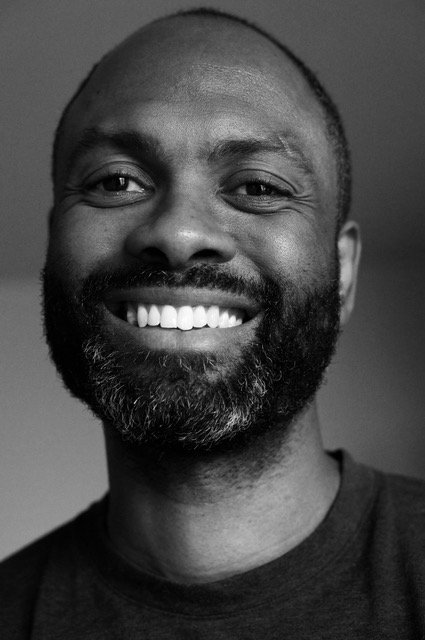
Author photo of Malachi McIntosh

2021 Writers’ Prize winner , author Professor Malachi McIntosh

And since being one of the 2021 prize’s winners, Mich Maroney launched a literary magazine, Swerve, this summer in Ireland. The magazine showcases emerging writers and artists from Cork and issue 1 is out now. Swerve aims to publish new and emerging writing but another, equally important, ambition is to publish works in translation.

If you want to follow in these brilliant winners’ footsteps, send your work to The Book Edit by submitting to The Book Edit Writers’ Prize, this year judged by acclaimed author Elizabeth Chakrabarty.

Aimed at supporting talented writers who might not otherwise have access to the industry, the prize is open to unpublished British and/or UK-based novelists from communities and backgrounds currently underrepresented in British publishing. You can see the full competition rules and details here. We can’t wait to see who will be next to join our list of writers whose work we have supported and continue to champion. The deadline for submissions is 22nd October 2022.

Author Mich Maroney on her experience of winning the 2021 Writers’ Prize

Learn more

Interview with Emily Midorikawa as her book, Out of the Shadows, is released in paperback

Emily Midorikawa is an award-winning writer, author of two nonfiction books, numerous articles in the likes of The Washington Post, Time and The Paris Review, and a celebrated creative writing tutor, currently teaching at New York University in London. She is also one of the Book Edit’s most respected nonfiction editors, responsible for editing client’s book proposals and whole drafts with impressive results (following work with Emily last year, one of her authors was shortlisted for the Tony Lothian Prize).

Author portrait of Emily Midorikawa by Rosalind Hobley

Author and editor Emily Midorikawa

September 20 saw the release in paperback of Emily’s second nonfiction book, Out of the Shadows. We were lucky enough to catch up with her to find out more about this fascinating book and her process as a writer.

The Book Edit (BE): What first drew you to the subject of clairvoyance?

Emily Midorikawa (EM): I stumbled on a mention of Kate Fox, one of the supposedly clairvoyant women I write about in Out of the Shadows, while doing research for a different book. I was reading handwritten letters from Harriet Beecher Stowe, the American author of Uncle Tom's Cabin, in one of the locked research rooms at the New York Public Library. Stowe, who wholeheartedly believed that the living could contact the dead, had written to her more sceptical British friend, the British author George Eliot, about Fox's talents. Stowe's vivid descriptions of the young woman leading a seance had me immediately intrigued and encouraged me to find out more about Fox and her sisters Maggie and Leah, who were also spirit mediums. My discoveries about the Fox sisters led me into a fascinating Victorian world populated by other women (and men) who were doing similar things – and in some cases gaining astonishing levels of social influence thanks to their unusual line of work.

Book cover of Out of the Shadows by Emily Midorikawa

Emily Midorikawa’s second nonfiction book: Out of the Shadows

BE: Your six visionary women all have to battle different patriarchal constraints to find their voice. What kinds of constraints have you felt finding your own voice as a female writer, and now mother-of-two, working today?

EM: When you are a mother, especially of small children, it's easy to feel that you have been completely subsumed by that role. I hope it goes without saying that I love my children and treasure the hours I spend with them – at least most of the time! – but it can be frustrating to realize that to many people I meet at the moment I don’t have an identity beyond that of ‘Lola and Dylan’s mummy’. On the question of trying to retain a voice of my own, I’ve found it crucial to have set times when I know that I can fully immerse myself in my work and speak – or write – using a voice that is markedly distinct from the one I use when I am, for instance, racing around the park with my children.

BE: This is your second nonfiction book. Did you approach the research of this one in the same way as your first or was it radically different?

BE: I learned a lot from the experience of writing A Secret Sisterhood, which also drew on lots of original sources – not least in terms of the need to organise my notes better, which saved me a lot of time during the editing stages this time round. Although my first book drew on several new research discoveries – including Austen family documents that had previously been thought to be lost – some of the diaries and letters I consulted were relatively well known to scholars. With Out of the Shadows, however, I was often looking at artefacts that had been overlooked, so that was new pleasure. On top of this, researching a book about spirit mediums meant handling all sorts of weird and wonderful objects associated with contacting the dead, which could be a lot of fun.

BE: You wrote your first book with fellow writer and friend Emma Claire Sweeney. Can you talk a little about the difference between writing collaboratively and writing on your own?

EM: Early in the writing process for A Secret Sisterhood, Emma and I divided up everything we thought we’d need to do to complete the book, and so we tackled much of the initial research and drafting independently. But even in those early stages, we were in constant conversation, discussing ideas and giving feedback on what the other had produced. Later, after many revisions of our chapters, we sat side by side at a single desk, rewriting and rewriting the book. Working together in this way was sometimes convivial and occasionally fraught – especially as final deadlines loomed! I'm sure there were times when each of us felt that things would be easier if we were writing on our own. Funnily enough, though, once I was working independently on Out of the Shadows, I found that I frequently missed Emma’s input. Luckily, I could still rely on her valuable advice. She was always there to talk through ideas, and she read drafts and gave feedback on every section of my book.

BE: In both your books your ability to dramatise your subjects’ stories and really bring them to life is notable, and remarkable. Have your skills as a fiction writer influenced your non-fiction work?

EM: That's very kind of you to say so. Yes, I think my background as a fiction writer did influence my approach. Although all the scenes I wrote in Out of the Shadows (and A Secret Sisterhood) were based on solid historical evidence – I did not, for instance, invent dialogue – I did decide early on that telling an engaging story was important to me and that I didn’t want to write a more traditionally academic book. I was influenced in this choice by the work of nonfiction writers I admire, such as Kate Summerscale, whose biography The Wicked Boy is one of my favourites.

BE: What advice would you give to anyone wanting to write a non fiction book?

EM: Most nonfiction, at least the kind I’ve written, is sold on a proposal. Basically, this is a document designed to give a literary agent, and ultimately a commissioning editor, a strong sense of what the completed book will be like, and where it would fit into the 'literary marketplace'. It will also include a sample chapter or two. Although a proposal is much shorter than a completed book, the reality is that to produce something enticing you need to have a very clear idea of what you want to write, and how it could be sold. It's definitely not a good idea to dash off a proposal.

BE: What are you working on now?

EM: I've been working on several essays recently, including a short memoir about some of my experiences as woman from a mixed cultural background (English and Japanese) living in modern Britain. I am also writing a new book – a historical novel this time, set in roughly the same period to that of Out of the Shadows, and which similarly focuses on an element of Victorian history that is relatively unknown today.

Thank you so much, Emily! We wish you every bit of success with the launch of Out of the Shadows in paperback. It’s a brilliantly written page-turner of a biography which deftly illuminates the story of six Victorian women and their perceived clairvoyant gifts, gifts which gave rise to unexpected levels of fame and influence.

Emily Midorikawa is the author of Out of the Shadows: Six Visionary Victorian Women in Search of a Public Voice (published in paperback on 20 September, 2022) and A Secret Sisterhood: The Literary Friendships of Jane Austen, Charlotte Brontë, George Eliot and Virginia Woolf (co-written with Emma Claire Sweeney). She is a winner of the Lucy Cavendish Fiction Prize and teaches writing at New York University London.


Find out more about Our nonfiction editing
Source: https://emilymidorikawa.com/

Dr Rosa Rogers joins The Book Edit as a mentor

We are delighted to have added another mentor to The Book Edit’s stable. Rosa Rogers is a Doctor of Philosophy in The Contemporary Novel: Practice as Research, and an experienced writing mentor and workshop facilitator.

A talented author in her own right, Rosa’s debut literary novel, Composition, was completed as part of her PhD at the University of Kent. Her short fiction, poetry and visual art have been published and/or exhibited in The Menteur (Paris), Stirred Press, Northern Quarter, East Street Arts, The Media Centre and Vortex Gallery, and she has performed her work across France and the UK.

Not content with her own creative output, Rosa is also a creator of multiple community projects, e.g. Poetry etc. and Tales of a Town, and is the former Co-Director of Vortex Gallery.

Rosa currently works as an assistant lecturer in Creative Writing in Canterbury, City, University of London, and Nantes where she receives outstanding feedback from students on her warm, generous and inspiring approach to teaching.

We are thrilled to announce she will now also be one of The Book Edit’s fiction mentors, working side-by-side with emerging writers to help develop their work and their confidence.

Welcome, Rosa!

Portrait of Rosa Rogers, Book Edit Writing Mentor