From Prize Winner to Published Author: Bren Gosling on Street Sweeper

When Bren Gosling entered the inaugural Book Edit Writers’ Prize, his debut novel Street Sweeper was already something special. It went on to become a winner that year, and we weren’t the only ones to think so — the Novel London Literary Prize agreed. Now, with his novel about to be published, I was delighted to get the opportunity to ask Bren about his path from manuscript to bookshelf.

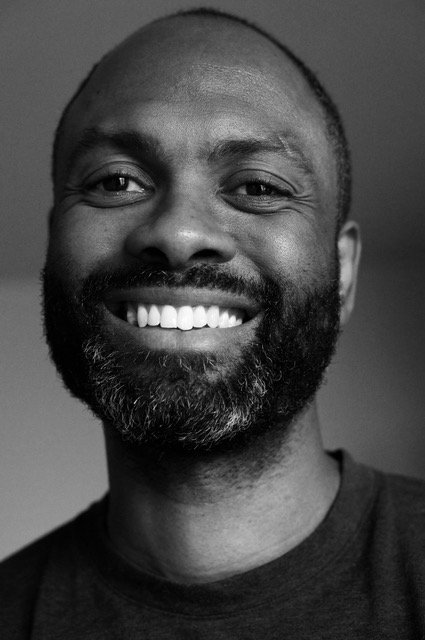
Novelist and playwright Bren Gosling

1.  Street Sweeper won both the Novel London Literary Prize and the inaugural Book Edit Writers’ Prize. What did it mean to you to have your novel recognised by these different prizes?

BREN: It was a sea change for me in how I saw myself as a novelist. My confidence was boosted. Part of the Novel London win included a very generous 12 months of 1:1 mentoring with the published crime writer Nadine Matheson. This gave me the opportunity to comprehensively re-draft my novel, gaining new insights into plot and character development. I also changed one of the characters completely ( age and gender) to make a stronger source of conflict within the narratives.

The Book Edit Prize offered continued encouragement and support. I can honestly say winning that has been instrumental in pursuing publication of my book.

2.   You’ve described your work as exploring ‘the narratives of quiet lives, extraordinarily lived’ and ‘marginalised voices of overlooked people and places.’ Where did the seed of Street Sweeper come from, and how did that core vision shape the novel as it developed?

BREN: OK, so it’s a long story! Essentially, I became housebound and unable to walk for two years due to  severe CFS/ ME. My previously active world shrank quickly to lying on a mattress and looking out of my front window onto the street and listening to Radio Four all day. I started noticing a street sweeper pass by outside on his beat, regular as clockwork. And I got to wonder what his backstory was. Who was he? Where was he from? What were his dreams and hopes for the future? I never did get to meet him, but this gave me the idea for the protagonist in my novel.

As I recovered – it took another three years altogether, and when well enough, I started doing creative writing courses – I eventually sketched out this idea of a street sweeper fleeing Kosovo ( Kosovo because no one was talking about the war that happened there anymore, it was forgotten) and relocated to London; meeting and falling in love with an older man. I went on a journey of research including interviewing Kosovan immigrants, attending a Pentecostal Church, and shadowing a local street sweeper, before I began to flesh out my character narratives. I set the story largely in gentrifying Walthamstow  Village, an area I knew well because I lived there ( I don’t anymore).

3.    I like to think that the Book Edit is somewhere the relationship doesn’t end when the editorial work does. Has that rung true for you, and what has that ongoing connection meant at the different stages of bringing Street Sweeper to publication?

BREN: Emily, definitely! You might win competitions, but writing can still feel lonely and is often stalked by thoughts of self-doubt. The Book Edit have been brilliant at keeping in touch, offering support and advice on routes to publication, especially at times when I felt I was getting nowhere. I think choosing to write literary fiction or UPLIT made it  harder to place my book. It’s taken a while. Just having a trusted sounding board to turn to when I needed helped me keep a clear vision.

4.    The journey from a finished draft to a published novel can be long and disorienting. How did you navigate the process and what was most helpful to you editorially?

BREN: Is a MS ever finished? Writing the beginning was relatively straight forward, the end much trickier, and the scenes in between got reshuffled, rewritten, some deleted and new ones added, so… I’ve lost count of the number of rewrites Street Sweeper has turned in. The upside is the characters in my book feel like they exist as real people and I had an increasing weight of responsibility to facilitate their most honest and raw narratives. Of course, these are fictional characters, but to me they’ve become real people. This novel has taken easily ten years to write, off and on. Through the ups and downs and breaks from the MS, I’ve always made myself continue to write. At first flash fiction ( I did an excellent online course with Fish Publishing) was great to just keep me writing. I even won some prizes, got published. To keep writing regardless is important, it’s a form of religion to me in a way.

Before winning the novel competitions, I’d just about given up with my book. I had written a second novel, but that didn’t get any bites from agents. It’s still on my laptop, but at the moment I can’t face getting stuck into another redraft (yet). I’m too busy with other theatre projects. In 2017/18, I was offered a place on The John Burgess Playwriting Course and grabbed that opportunity to diversify into writing for theatre. I used Street Sweeper to inspire my play Proud which got a producer and had a four-week run in London during 2022. I think if you have recognition by way of competition listings and wins, perhaps that’s a sign for you to continue with a book. But I did take a break for a while. Like I’ve said, the mentorship with Nadine Matheson was brilliant and helped me look afresh at the MS. I don’t think I would have done that if I’d not won The Novel London Literary Prize.

5.    You’re an established playwright with work performed at the Arcola and the King’s Head theatres amongst many others. How did your experience of writing for the stage influence the way you wrote fiction?

BREN: My initial forays into writing for theatre were monologues. I soon realised a prose monologue is a very different beast to a theatrical monologue. Scratch nights and festivals proved brilliant testing grounds for my theatre work, and I’ve used both to hone my playwriting skills and experience. I LOVE collaborating with actors and a director on a new script. It’s a process that also involves rewriting. But evolving a new piece this way can be thrilling, especially when a live performance is realised.

6.    Publication day is a milestone many writers dream about for years. Now that it’s here, how does the reality of it feel compared to what you imagined, and what’s surprised you most about the road to publication?

BREN: The decision to go indie was scary at first, but the process of working with my publisher Troubador has been a joy. Especially, I have enjoyed collaborating with a designer on my book cover. And I’m really pleased with the style and format of the printed text we’ve chosen.

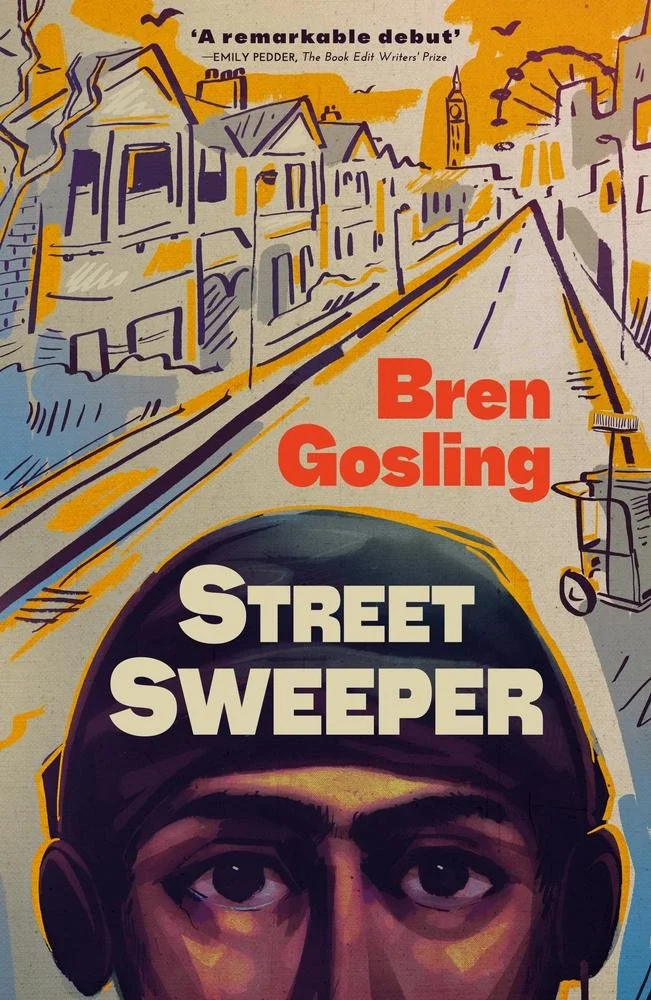
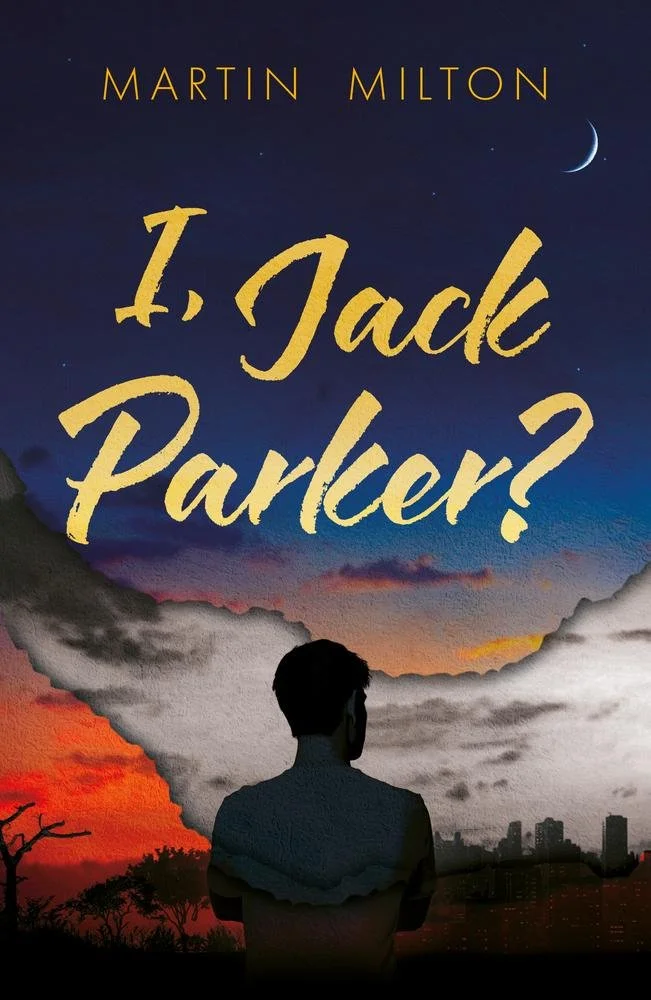
Bren Gosling’s debut novel, Street Sweeper

8.  For unpublished writers who might be sitting on a manuscript right now, wondering whether to seek editorial support or enter a prize like the Book Edit Writers’ Prize, what would you tell them?

BREN: I can’t recommend enough the importance of having an external support editorially: someone you respect professionally, and you know has confidence in what you are trying to achieve with a project. The Book Edit gets top marks from me!

9.   You’re based between Suffolk and London, and you’re a member of the Writers’ Guild of Britain. How important has community and connection with other writers been to your creative life, and how do you sustain that?

BREN: I’ve been a member of a couple of writer’s groups down the years, which I found helpful in getting my early drafts heard and critiqued, and for honing my own critiquing skills. There’s a certain camaraderie to being part of a writer’s group – a sort of ‘we’re in this together’ vibe.

The Writers Guild of GB membership is an important support. They give great advice on legal or creative conundrums and afford access to opportunities like showcases, competitions etc.

10. What's next? You have Invisible Me heading to Southwark Playhouse and Grossly Indecent in development, how do you manage the creative demands of both playwright and novelist, and which hat are you wearing most comfortably right now?

BREN: There is lots to do in the lead up to the publication of my novel Street Sweeper, though my publisher is taking on many of the tasks such as trade and digital marketing. I must organise a book blog tour and approach local bookshops for events. Again, this can be a bit nerve racking and time consuming but will pay dividends (fingers crossed).

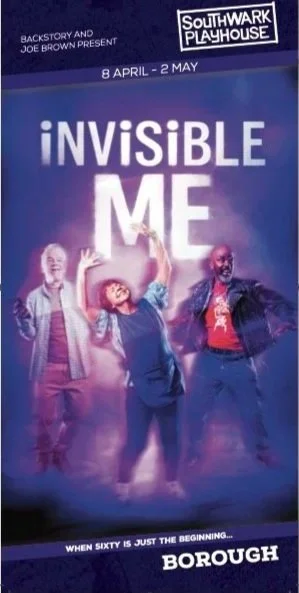
Having a professional producer onboard for my upcoming play allows me, the writer, to take a back seat from the day-to-day. I did attend the production photoshoot once we’d cast, which was exciting. I will be attending some but not all the rehearsals. I have a great director for the play, who has also been dramaturg on the script so that’s given me confidence in the piece. It is cool to see Press and Media coverage, and we’ve already had exposure on BBC’s The One Show, Channel 5 News and upcoming on ITV, as well as coverage in The Mail, and The i Paper. Hope you and your readers will come and see us at Southwark Playhouse (Borough) 8th April- 2nd May 2026!

Catch Bren’s new play at the Southwark Playhouse next month

The hat I am wearing right now has both novel and  play insets. I think my next project will be to develop a production of  my play Grossly Indecent. But that’s currently  somewhere on the horizon…😊

QR code for Bren’s new play at the Southwark Playhouse

Thanks so much, Bren! And huge congratulations on the upcoming publication of your novel, Street Sweeper. We wish you every success with this book and all your other exciting creative projects.


The Book Edit Writers' Prize 2025 Launches Today

We are thrilled to announce the launch today of the Book Edit Writers' Prize 2025, an initiative dedicated to discovering and promoting talented, unpublished novelists now in its fifth year.

A Platform for Emerging Talent

Eight winners of the competition will get to present their work at an online Zoom showcase in front of invited industry guests, with an anthology of their work and a recording of the showcase featured on The Book Edit’s official website. They will also have the opportunity to train and rehearse for the showcase event, and all participants will receive guidance on other options including mentoring, editing and courses.

As an added benefit this year, we have teamed up with a top literary agency who will have first access to the winning entries a week before the showcase.

We will also record and spotlight the shortlisted entries to create exposure for more writers.

The Book Edit Writers’ Prize was both energising and motivating. It offered a creative challenge that sustained my focus and immersed me in the process from start to finish.

— Michelle Wales, 2024 Winner

Meet our Judge, Janice OKOH

We’re delighted to welcome Janice Okoh as the judge for this year’s prize. Janice is an acclaimed writer and author of the recent smash hit BBC3 Comedy Drama, Just Act Normal. Janice has said it is ‘an honour to be this year’s Writers' Prize Judge.’

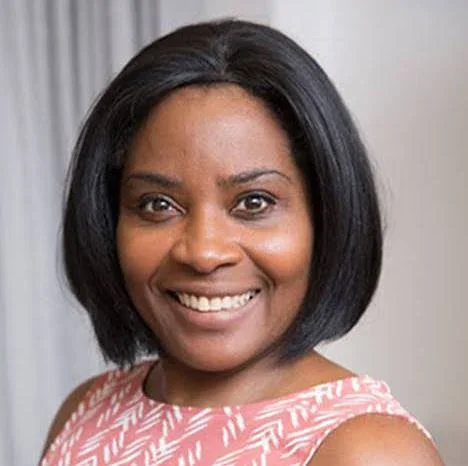
Writers’ Prize Judge 2025 Janice Okoh

What the Prize Offers

The Book Edit Writers' Prize is more than just a competition. It's a launchpad for emerging talent, offering:

  1. Industry Exposure: Eight winners will have the opportunity to showcase their work to top industry professionals.

  2. Publication Opportunity: A chance to be featured in our anthology, putting your work in front of a wider audience.

  3. Networking: Connect with fellow writers and industry insiders.

It was a privilege to be a part of the Writers’ Prize and working with the group of winners and the Book Edit team. Not only is being selected as a winner incredibly helpful to your writing CV, the practical training for a public reading (with agents and an audience) as well as the camaraderie with other winners is fantastic.

— Bernie McQuillan 2024 Winner

Key Dates

  • Submissions Open: September 1, 2025

  • Submission Deadline: October 13, 2025

  • Rehearsal for winning writers: 19th November 2025

  • Online showcase event: 26th November 2025

  • Anthology of winners’ readings published: 3rd December 2025

How to Apply

For full details on submission guidelines and to apply, please visit our website.

It was an honour to win last year's Book Edit Writers' Prize. It kickstarted my career as a writer. I'd recommend that any aspiring writer of colour apply.

— Pavan Amara, 2024 Winner

What are you waiting for? We can’t wait to read your submissions!

Publication news from The Book Edit Writers' Prize

As we prepare for our 2025 prize with submissions opening September 1st, I wanted to share some updates from our wonderful past winners, short and longlisted writers. Starting this week, let’s look at the latest publication news.

Publishing Dreams Becoming Reality

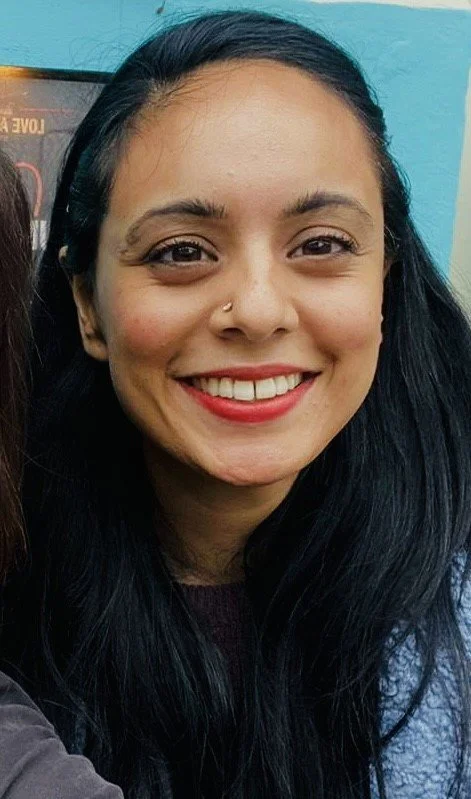
Pavan Amara has secured a two-book deal with The Borough Press following a three-way auction. Her debut novel Mirror, Mirror – the very book that won our prize – will be published in Spring 2027.

Pavan Amara

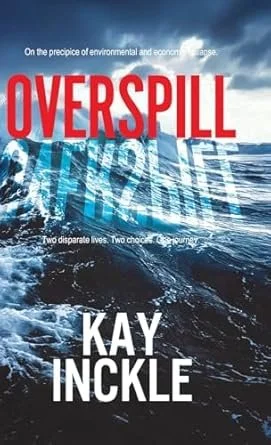
Kay Inkle has just signed with SRL Publishing for her cli-fi debut novel Overspill.

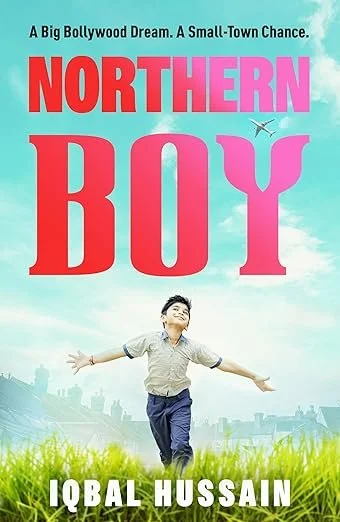
Iqbal Hussain published his debut novel Northern Boy with Unbound Firsts in 2024. His debut children’s book, The Night I Borrowed Time, will be published in early 2026 with Penguin.

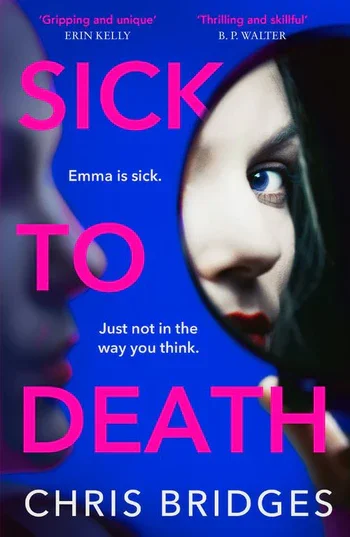
Chris Bridges published his debut Sick to Death with Avon Books to rave reviews.

Emily Abdeni Holman’s poetry collection, Body Tectonic, was published by Broken Sleep Books last summer. She has also contributed her poem, Where We Find Ourselves, to the Arachne Press’ Global Majority anthology. 

Bren Gosling is publishing his debut novel The Streetsweeper with Troubador Books, due out next year.

Congratulations to all these wonderful writers!

Looking Forward

As we prepare for 2025 with the brilliant Janice Okoh as our judge, I'm excited to discover who will join our brilliant past winners, short and longlisted writers.

The stories above started with 1,000 words and a synopsis submitted to our prize. Your story could be next.

Submissions open September 1st.

Spotlight on some of last year's winners of the Book Edit Writers' Prize

With just under three weeks left until The Book Edit Writers’ Prize deadline, we wanted to profile some of the brilliant winners of last year's prize to inspire submissions to the competition…

Portrait of author Bren Gosling

2021 Writers’ Prize winner, author Bren Gosling

Bren Gosling was one of last year’s winners with his novel The Street Sweeper. Since then, his new play ‘Proud’ has had a sell-out run at the King’s Head Theatre, London. The play, inspired by The Street Sweeper, is a powerful new drama focusing on a queer love story, tackling contemporary themes of race, trauma, religion, and sexuality. His play, ‘Moment of Grace’ also ran this summer at the Hope theatre in London and tells the story of Princess Diana’s famous visit to the UK’s first HIV/AIDS ward 35 years ago.

2021 Writers’ Prize winner Hannah Hoare’s debut novel Parahumanity

Bren has said that: “Winning The Book Edit Prize gave me the boost in confidence every writer needs once in a while to just keep going.”

Meanwhile, Hannah Hoare, another of 2021’s winners, had her novel Parahumanity published on 19th August 2022 by Wild Wolf Publishing. The book envisions a dystopian future where both science and religion have fallen into disrepute, following semi-feral 17-year-old Katrina as she uncovers the truth.

Hannah has said that: "Winning the Book Edit Writers' Prize did more than give me confidence as a writer: it connected me with a wonderful group of fellow writers who, nine months on, are still in touch to celebrate our successes."

Another 2021 Book Edit Writers’ Prize winner, Professor Malachi McIntosh, will publish a ground-breaking group biography of the Caribbean Artists Movement with Faber in 2023. Speaking of the Writers’ Prize, Malachi said “My confidence in my creative writing is a constant seesaw. Winning the Writer’s Prize came at a time when it felt like my fiction might never get much recognition. It really reinvigorated my faith and introduced me to some fantastic fellow writers. I can’t recommend participation highly enough.”

Author photo of Malachi McIntosh

2021 Writers’ Prize winner , author Professor Malachi McIntosh

And since being one of the 2021 prize’s winners, Mich Maroney launched a literary magazine, Swerve, this summer in Ireland. The magazine showcases emerging writers and artists from Cork and issue 1 is out now. Swerve aims to publish new and emerging writing but another, equally important, ambition is to publish works in translation.

If you want to follow in these brilliant winners’ footsteps, send your work to The Book Edit by submitting to The Book Edit Writers’ Prize, this year judged by acclaimed author Elizabeth Chakrabarty.

Aimed at supporting talented writers who might not otherwise have access to the industry, the prize is open to unpublished British and/or UK-based novelists from communities and backgrounds currently underrepresented in British publishing. You can see the full competition rules and details here. We can’t wait to see who will be next to join our list of writers whose work we have supported and continue to champion. The deadline for submissions is 22nd October 2022.

Author Mich Maroney on her experience of winning the 2021 Writers’ Prize

Diverse voices mean business

by Rebekah Lattin-Rawstrone

The Book Edit’s Writers’ Prize for writers currently underrepresented in UK publishing was an amazing initiative to be part of.

Given the relatively recent publication, Rethinking ‘Diversity’ in Publishing, 2020, which directly explores the obstacles faced by writers of colour in trade publishing in the UK, and the #blacklivesmatter movement, our nationwide interest in inclusion within publishing in particular should be high.

However, despite seeing a growth in titles published by diverse authors, the barriers to inclusion are plainly visible all over the shelves of our bookshops. 


As literary agent Natalie Jerome quoted earlier this year in the Guardian, you are eight times more likely to see an animal as the main protagonist of a children’s book than a person of colour. The Rethinking ‘Diversity’ in Publishing Report interviewed 113 members of the UK Trade publishing industry, looking at obstacles to publication, and overwhelmingly recommended that the industry rethink its understanding of ‘diversity’, particularly in relation to its audience.

Rather than evaluating titles based upon a narrow vision of a white, middle-class, female reader (the infamous ‘Susan’), they should expand their sense of audience to represent the full diversity of the nation and in so doing expand their potential audience and increase profits. 

The Book Edit’s Writer’s Prize is not only an example of some of the industry diversity initiatives that the report encourages, of which there are a growing number, but was also set up to try and recognise that wider sense of representing the full diversity of the nation, encouraging submissions from a wide range of groups currently underrepresented in UK publishing including writers of colour, those with disabilities, LGBTQ+, working class or low-income writers.

The submissions that came through on the basis of this remit were hugely diverse and immensely impressive. 


As a member of the overrepresented, judging the prize required real self-scrutiny over my unconscious bias—not only am I white, I am also privately educated, making me an example of the one in five respondents to the 2019 Publishers Association Workforce Survey who attended independent or fee-paying schools, which is almost three times that of the UK average—and of course it is impossible to thoroughly test how capable I was of redressing this.

What I can say is that I am very excited by the writers who won the prize and finally got to showcase their work to the industry: William Cairns, Bren Gosling, Nish Hegde, Hannah Hoare, Kay Inckle, Shane Lowe, Mich Maroney and Malachi McIntosh. You can read more about our fabulous winners here

As a writer and creative writing teacher, I’m constantly asking myself questions about representation. There are expectations about what subjects and which characters individual writers can write about. The Writing the Future report (Spread the Word, 2015) found that black and Asian authors felt encouraged to reproduce ethnic and racial stereotypes both in their stories and in the way their books were packaged and marketed.

As a creative writing PhD student at the Open University, studying through the Open-Oxford-Cambridge Doctoral Training Partnership, I’m actively exploring something I’m calling narrative imperialism, which asks whether the way we tell stories, not just events within the stories, is influenced by the cultural hegemony and, of course, by perceived notions of the market.

With an industry based upon previous sales, stepping outside of these expectations isn’t easy—there are a lot of people to persuade before your book can make it to the shelves, even if the writing, at the level of the sentence, is scintillating, titillating, delightfully playful or crystal clear in its sparse precision. Whilst there are huge, untapped diverse audiences, the industry, as the above 2020 report suggests, is still largely focused on audience ‘Susan’, because she is already lucrative enough. How do we challenge that? Especially when the onus on answering this question shouldn’t be one left simply for the underrepresented to answer. 


Having said all of this, and in awareness of the importance of not relying on the underrepresented to find solutions to these publishing obstacles, it seemed important to ask our brilliant prizewinning writers, each of whom belongs to a group or groups currently underrepresented in UK publishing, about their experience of the industry and their opinions about how it could be further diversified.

I began by sending out a few questions and asking our authors to respond either by answering my questions or simply sending me their own thoughts on what the industry could do to encourage and nurture diverse talent.

My questions covered their own experience of the industry to date; whether they felt it had been harder for them to engage in the industry because their voice was currently underrepresented; what the industry could do to make access easier for them; whether they felt the industry had expectations of their work—the content, its structure etc.—because of the community or communities to which they belonged, and whether presenting something different to those expectations provided a further barrier; and anything else that mattered to them. 

I had an overwhelmingly eloquent and stimulating response, even from those, like Mich Maroney, who felt they hadn’t yet had enough interaction with the industry to respond in greater depth.

Several writers felt that feedback from the industry, when submitting, was something that would help, particularly for those who can’t afford to pay for feedback through courses or manuscript and editorial services.

Even those who work in the industry, such as Malachi McIntosh, agree that treating writers as ‘people rather than raw material’ is essential. He understands why the industry blank submissions and send standard rejections, but ‘the least we can all do is treat aspiring writers with care and respect. Billions of hours of labour are going into works that often don’t pass muster. At least say keep trying.’ 

Feedback would help writers work out why they are being rejected and make it clear whether the writer or the industry needed to work harder. As the Rethinking ‘Diversity’ in Publishing, 2020 report suggested, the industry needs to question its assumptions around being a meritocracy. Such assumptions don’t always stand up to scrutiny when looking at celebrity publishing, for example. The assumed audience rears its ugly head again.

As our writers explained, having work rejected on the basis of an unrelatable character or storyline would suggest the industry needed to do some more work into its other potential audiences, or markets, whereas a rejection based on skill would be something for the writer to work on.

Writer Hannah Hoare extrapolated: ‘The more I attempt to get my work published, the more aware I become that publishing is a business. I therefore find it strange that largely untapped markets of readers exist who are desperate for stories relating to their own experiences. Currently, many consume their fiction online, as web comics, fan fiction, and other independent content—works which bypass the gatekeepers of mainstream publishing and reach their audience undiluted. These readers are not necessarily looking for stories in which a minority character suffers through and overcomes prejudice; nor are they looking for works which aim to explain a minority perspective to a mainstream audience. They are looking for something which speaks to them, as people of minority backgrounds themselves.’

For our authors, putting work into exploring diverse markets and nurturing diverse voices is simply good business. Nishith Hegde—who said he felt he might have more success submitting work as Nick Hedge—makes it clear that, ‘The obvious question of moral decency aside, it [the exclusion of certain voices] is also plainly counterproductive to successful business.’ Hannah’s further advice to the industry was, ‘Don’t limit yourself to the conventional writing groups, literary festivals and creative writing MAs. Go to meetups, find forums, and learn about the communities you hope to represent. Learn about their experiences, what they find relatable, and what they want to read. Then you can set your sights on sourcing diverse writers who can write these stories.’  

Shane Lowe suggested that the industry might want to invest early, in the way that football invests in schools and academies throughout the country, nurturing enthusiasm and providing resources at the grassroots level in order to open up access to creative writing. He asks us to imagine the current system working on the basis of tennis coaching, when it ought to be working on the basis of football coaching: rather than relying on talent grown through paid coaching sessions, the resources and skills for reading and writing should be offered to a greater number of young people who might then go on to take an interest not only in writing but also in reading and providing the market and industry professionals for those young writers.

The idea of changing the gatekeepers was a strong one to come through from our writers too. It isn’t enough to have diverse writers but to have diverse readers judging the work. As William Cairns put it, ‘the literary establishment doesn't appear to be very good at letting certain groups in’. He went on to say: ‘works written by members of under-represented groups pass through the hands of many individuals within publishing, a large percentage of whom belong to the over-represented, who by a kind of cultural reflex may often pass on work that doesn't match their own notions of what good books should be. So it's inevitable that working-class writing would have a hard time passing this barrier, even if the barrier is complacent and passive rather than actively hostile. As for the various efforts being made to address this… With the best will in the world, these are being made by the very people who are part of the problem.’

The idea of agents and publishers expecting work from certain communities to follow certain trajectories and be about certain kinds of characters was also noted.

Malachi McIntosh remarked: ‘I want the freedom to write about whatever, but I feel like an interest in “diversity” in publishing is about Black-face-in-silhouette covers and content and nothing more experimental or potentially challenging. It sometimes feels the mainstream is solely interested in perceived notions of marketability and, for non-white or otherwise marginalised writers, that means a correspondence between the category you’re perceived as fitting into and the content of your work. I regularly think, like a generation of Black actors—and writers in fact—that I’d have an easier time in the US where notions of what’s allowable and possible seem wider.

‘... I worry about the kinds of stories we’re allowed to tell and the unspoken fixation on notions of “authenticity”—that is what someone else thinks is “authentic” for you to be writing about. Every prize/scheme for Black writers I’ve seen seems to reward stories that only capture a fraction of what it is to be Black in Britain, and certain stereotypical representations feel like they’re the ones publishers are most excited about. Both Zadie Smith and Bernardine Evaristo have both written about this (in the New York Review of Books and the Guardian, respectively. Even I have! (in the Independent)).’ 

This feeling was reflected in the responses of other authors too. William Cairns was particularly eloquent about Shuggie Bain:I apologise for referring again to Shuggie Bain. My worry is that by winning the Booker it became an exemplar of what to expect from my community. Because a book that reads like it was written with the help of a tick box entitled “Scottish Working-Class Stereotypes” isn't a good role model for the future. A book steeped in deprecated stereotypes sets a bad precedent in terms of what publishers want or expect from us. Even the prose style is unrepresentative—characters speak in dialect but Shuggie thinks in traditional English prose. It's ironic that the book's author has praised James Kelman for pioneering a writing style that utilised Glaswegian speech patterns in every aspect of a work, inspiring writers like myself to use their own dialect. It's ironic because Shuggie Bain, rather than being a stylistically authentic work that builds upon Kelman, is a backward step. And as a writer hoping for more nuanced representations of Scottish working-class life as we move through the 21st century, this is disappointing to say the least.

Kay Inckle spoke about disability and fiction: ‘The industry, like the rest of the world, is dominated by able-bodied perceptions of disability. Therefore, the representations of disabled people that get published (usually by non-disabled writers) are those which reinforce able-bodied fears and prejudices about disability. Disabled people usually function in fiction as mono-dimensional stereotypes, metaphors and tropes for lives not worth living, failed masculinity, or pitiable broken bodies. And that creates a cycle where perceptions remain that disabled people have nothing to contribute except tragic tales of empty, broken lives filled with yearning to be restored to “normality”. Yet disability is always a critical and creative relationship to the world which offers a rich seam of experience and imagination at both the universal and specific levels of human lives.’

If you insert any of the underrepresented categories into Kay’s following sentence, you get the feel for the message being spoken by all of the authors: ‘Fiction has the power to unleash huge perceptual shifts, but first we need the industry to critically assess itself in relation to disability and disabled people so that it can be truly open and diverse.

As Nishith Hegde put it at the end of his response: ‘Almost every person on this planet has one of the demographic characteristics that publishing people would consider underrepresented, and would hand-wring about their own inability to promote. Who, then, does the industry imagine are their readers? I guarantee the average person walking into Waterstones, or WHSmith, or Foyles, or the charity shop, or the library, is an underrepresented person by one of the demographic indicators we discuss ... 

Almost every child, gifted with boundless imagination, who needs literature for comfort, to feel safe, to broaden their horizons, to set them on paths into the world—from the furthest reaches of the stars to the meta-textual world of writing itself—loses out as a result. This is why change needs to be cyclical, and why the building of community, dialogue, and yes, a frank appraisal of the publishing system itself, is necessary. Nothing will change until, instead of opening doors, we begin to ask  ourselves why there is a wall in the first place.’ 

After The Book Edit’s Writer’s Prize 2021 Showcase back in November 2021, the writers stayed online to talk about the evening. There was unanimous appreciation of being part of a cohort of prizewinners for this prize, rather than there being an individual prize winner, and some remarked on how they appreciated that the prize was open to all underrepresented writers, rather writers from one underrepresented identity. As the writers made clear in their responses to my questions, we all have multiple identities that intersect and the sooner the publishing industry recognises and celebrates the talent and revenue possibilities of this, the better. 

The Book Edit’s Writers’ Prize 2021 competition winners remind us of the importance of industry diversity initiatives but also call on the industry to abandon the comfort of their unrepresentative imagined audience and seek out ways to engage with an audience that is truly representative of the diversity of our nation. It should be an exciting proposal. As Bernadine Evaristo writes in the Foreword to the Rethinking ‘Diversity’ in Publishing Report, 2020, ‘Literature transcends all perceived differences and barriers. It’s partly the point of it’.