Author Spotlight: Hannah Begbie

One of the joys of editing is working with talented writers and watching them flourish. The Book Edit is extremely proud to have worked with some fabulous authors and to have played a part in their journeys. As The Book Edit Writers’ Prize gets underway, we want to draw attention to some of the writers we have worked with as inspiration for those eager to follow in their footsteps and Hannah Begbie is the first of our award-winning novelists to take the spotlight.

Portrait of author Hannah Begbie

Author of Mother, 2018, winner of the Romantic Novelists’ Association Joan Hessayon Award, and Blurred Lines, 2020, both Harper Collins, Hannah Begbie’s work is sharp, compelling and relevant. A writer who is definitely one-to-watch, The Book Edit was delighted to work with Hannah as her writing journey first took flight.

As Hannah puts it, ‘In those uncertain months before securing an agent and then publisher, Emily’s work as editor on my manuscript was crucial. Her notes were always perceptive and challenging but framed with real encouragement and support. I was lucky to have someone so talented helping me take my story forward: Emily deserves real credit for the fact that it’s being published.’    

Currently writing her third novel, Hannah’s first two have been met with huge critical acclaim. Mother examines the complexities of motherhood with the additional difficulty of having a child with cystic fibrosis and Blurred Lines tackles the film industry’s darker truths, fast becoming a classic of the #metoo era (Read our review of Blurred Lines here). Exacting and fearless, Hannah’s work is both searing and filled with human warmth. If you haven’t read her yet, you are in for a treat. The Book Edit couldn’t be more proud to have supported Hannah at the early stages of her career.

For a chance to share your work with the industry and follow in Hannah Begbie’s footsteps, enter The Book Edit Writers Prize. Aimed at supporting talented writers who might not otherwise have access to the industry, the prize is open to unpublished novelists from communities and backgrounds currently underrepresented in British publishing. Enter before midnight on 22 October 2021. And don’t forget to look out for our next author spotlight.

TheBookEditWritersPrizeimage.png

City Writes Final Call For Submissions

Calling all current students and alumni of City, University of London’s short creative writing courses, the deadline to submit to this term's City Writes is this Friday, 11th June. They’re looking for your best 1,000 words - fiction and narrative non fiction - to share the virtual stage with alumna, Alex Morrall, whose debut Helen and the Grandbees was published to great acclaim by Legend Press last year. Full submission details are here.

Book cover of Helen and the Grandbees by Alex Morrall

Helen and the Grandbees by Alex Morrall

This term's online event with Alex Morrall is on Wednesday 7th July at 7pm. You can register for your ticket here.

City Writes was founded by our very own Rebekah Lattin-Rawstrone and is a termly event showcasing the best of City's short courses creative writing talent. Winners of the competition get to share the stage with authors like Kiare Ladner, Imogen Hermes Gowar, Katherine Menon, Harriet Tyce and Deepa Anappara.


Winners of this term's competition will be announced in week 9. Find out how to submit here. Register for the event here. We’ll be going and hope to see some of you there!

What are the different types of book editing?

“No iron can pierce the human heart as chillingly as a full stop placed at the right time.”
— Issac Babel

When it comes to choosing a professional editor to work on your novel, things can get confusing. What’s the difference between proofreading and copyediting? What does a developmental editor do? And which editing comes first? Read on for our mini-guide to the different types of editing.

Photo of yellow pencils on wooden background

Proofreading

Proofreading is the final polish of a manuscript: a safety net that ensures nothing slips through. Typically, a proofreader will look out for micro-level errors such as spelling mistakes, typos and punctuation errors; errors in page numbering, text alignment, spacing, font size and style. If you’re planning to self-publish and have limited funds to invest in editing, it’s always worth getting a proofreader to check your manuscript before it goes into the world.

Copyediting

A copyedit will check for and correct grammatical, spelling, syntax and punctuation errors as well as consistency in spelling, capitalization, font usage, numerals and hyphenation. Continuity errors will also be checked, as well as factually incorrect statements. In fiction, this continuity applies to character description, plot points and setting. Finally, a copyedit will check for potential legal liability and verify that a manuscript does not libel others.

“The wastebasket is a writer’s best friend. ”
— Isaac Bashevis Singer


Line editing

marcus-ganahl-W5qgKZj-qnk-unsplash.jpg

Although a line edit will check and correct all the potential errors involved in copy editing and proofreading, the real work in this kind of editing is to do with the writer’s language. A really good line editor will suggest changes to the language to make it clearer and stronger, changes that will also enhance and strengthen a writer’s style and voice.


Developmental editing

Sometimes called structural or content editing, this is the Big Daddy of editing services and is usually best employed at an early draft stage. A developmental editor will read your manuscript paying particular attention to macro-areas such as story, genre, plot, pace, character, dialogue, setting, voice, structure and tone.

Typically, a developmental edit will entail detailed notes on your manuscript, including areas that need development and suggestions for rewrites. Comments may also be embedded into the text to illustrate areas in need of further work. This kind of editing is very labour intensive and, to be really effective, requires an editor to have a deep understanding of story analysis.

And that’s it: four very different types of editing, all useful but at different times.


For anyone who’s interested in learning more about the relationship between writing and editing, the following books are highly recommended:

  • Athill, D. Stet, Granta, 2011

  • Coyne, S. The Story Grid, Black Irish Books, 2015

  • Saunders, G, A Swim in a Pond in the Rain, Bloomsbury, 2021

  • Maxwell, W. The Happiness of Getting it Down Right, Random House, 1998 

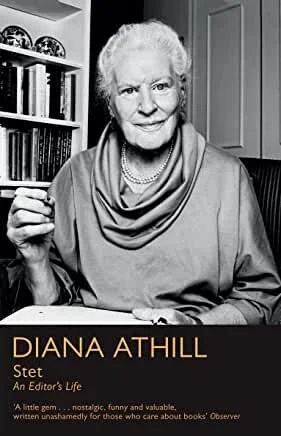
Book cover of Stet by Diana Athill

5 Reasons why you need to apply for City University's Novel Studio

There are just 20 days left to get your application in to City’s Novel Studio 2021 Programme…

portuguese-gravity-X3wFD32selk-unsplash.jpg

Here’s why you should apply…

  1. The course has a proven track record. Alumni include Award-winning authors Deepa Anappara, Hannah Begbie, and Harriet Tyce, amongst many others.

  2. It’s practical. Each module has been designed to support you in writing your novel, from developing your plot to character motivation.

  3. The tutors are brilliant: Rebekah Lattin-Rawstrone and Kiare Ladner are both professional writers, editors and creative writing teachers who really know their onions and want to help you become better writers.

  4. It has great links with the publishing industry. Each year students are trained in rehearsed readings towards an end-of-year show to an invited audience of literary agents.

  5. There’s one fully-funded space available for a talented writer from a low-income household via their scholarship scheme.

Apply before 30 April 2021