Monique Roffey wins Costa Book Award 2020

We were delighted to hear that Monique Roffey had won the Costa Book Award 2020 for her novel The Mermaid of Black Conch. Published by Peepal Tree press, this is Roffey’s sixth novel and a thing of pure beauty: a deeply moving love story between local fisherman, David Baptiste, and the mermaid he first lays eyes on one morning off Murder Bay: 

‘David was strumming his guitar and singing to himself when she first raised her barnacled, seaweed-clotted head from the flat, grey sea, its stark hues of turquoise not yet stirred.’ 

This barnacled creature, we later discover, is Aycayia, an indigenous woman turned into a mermaid many years before by her own women in a jealous attempt to stop her beguiling their men. 

Costa Book Award winner 2021, The Mermaid of Black Conch by Monique Roffey

Costa Book Award winner 2021, The Mermaid of Black Conch by Monique Roffey

Later, when Aycayia is yanked from the sea by American tourists as part of a macho fishing competition and strung up on the harbour for all to see – ‘her head hanging downwards, her deadly hair trailing, her arms lashed with rope behind her back, her breasts naked’ – we do not expect a happy ending . But Roffey has written a subversive tale. In Baptiste’s care, Aycayia is rescued, and nurtured. She sheds her fish scales and her tale, she learns to speak, and she once more, exercising, and enjoying, her considerable powers over the fisherman. 

But as local suspicions grow around the new ‘woman’ seen near Baptiste’s home, and Aycayia experiences strange echoes of the ancient curse – in one epic scene, fish begin to rain down from the sky, an act Aycayia feels sure is connected to the curse – she asks David to take her back to the sea. 

With a clever structure, a vivid cast of characters – from Porthos, the corrupt policeman, to Miss Rain, the complicated landowner and Miss Priscilla, the brilliantly nasty neighbour – and the kind of exquisitely rich language that makes you yearn to see the landscapes and people Roffey describes, The Mermaid of Black Conch is one of those novels that will capture your heart and make you want to return to it again, and again. 


City Writes Spring 2021 Competition Open

City Writes, City University of London’s termly writing competition, is open for submissions.

Kiare Ladner’s debut Novel, Nightshift

Kiare Ladner’s debut Novel, Nightshift

Past and present City University London short course writing students: City Writes is back and looking for your fiction or non-fiction. Selected and hosted by the brilliant Rebekah Lattin-Rawstrone, one of The Book Edit’s editors, this term's event will feature guest author Kiare Ladner whose debut novel, the devastatingly good Nightshift, is due out in February with Picador. To join her 'on stage', full competition details are here.

For anyone wanting to attend, it's free, online and lots of fun, just register here.

Deadline for submissions: Friday 5th March

City Writes Spring Event on Zoom: Thursday 1st April at 7pm

Good luck!

Living Inside Raindrops: Luke Butler on his path to publication

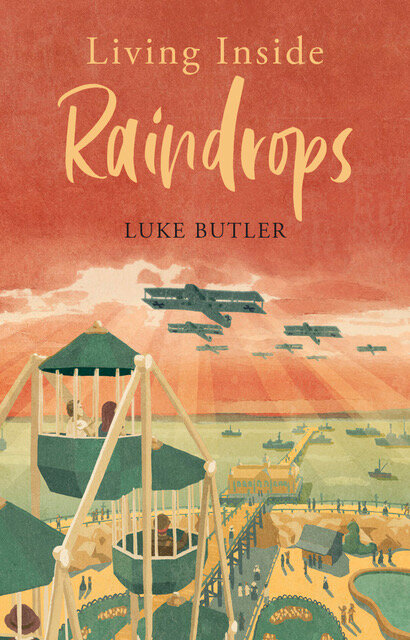
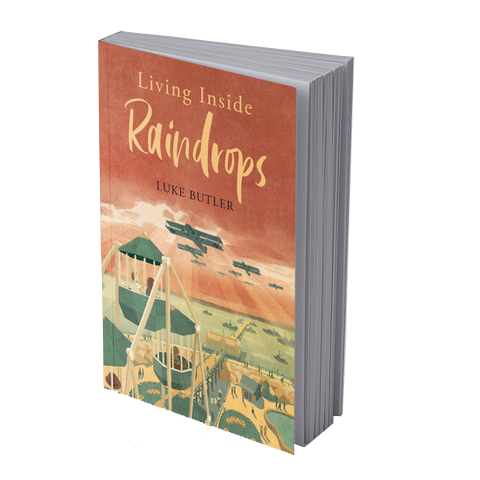
Luke Butler’s debut novel Living Inside Raindrops

Luke Butler’s debut novel Living Inside Raindrops

When Luke Butler chose to work with The Book Edit, we were thrilled. Passionate about his subject and a born storyteller, it was clear he had huge potential. We were very happy to hear news of his publishing deal and delighted when he agreed to tell us more about his path to publication.

Living Inside Raindrops: On the Road to Publication by Luke Butler

“Writing can often be the easy part, it’s just you and your subjective assessment of your own work. It is what follows that can be all so difficult. 

I started writing as a form of therapy. I lost my dad suddenly at a young age and subsequently, and somewhat subconsciously, this event threaded its way into my debut novel: Living Inside Raindrops. 

Spanning four years; a proposal, a marriage, a house move and the birth of my first child, the book was ready for the world. Or so I thought.

At completion, I believed I had created a great paean for generations of readers and scholars to dissect and debate, the apotheosis of my life thus far. Then I opened the door. Knowing very few avid readers, I discovered The Book Edit.

Feedback is as essential to the process as having ink in your pen. It shone light on my novel as readable art, not just a journey in my head. After receiving my developmental edit from The Book Edit, I was challenged and I adapted my work dramatically. Yet another year passed, but this time I was actually ready for the world to have my book. 

The romanticism to be published always outweighed my inclination to self-publish. Partly due to a fantastical belief someone else could share a passion in my novel, and partly because having a printed paperback copy in a dusty bookshop, one that could live on beyond my own lifetime, was an ideal too great to forgo. It also somewhat naively puts you amongst titles created by your great idols and predecessors.

So, with self-publishing on the back burner, I purchased the latest edition of the Writers' and Artists' Yearbook and spent nights making a shortlist spreadsheet of all those with an interest in Historical Fiction, as well as those willing to take unsolicited material. Given my book was set during WW1 I thought up the notion of emailing my shortlisted publishers and agents as the clock chimed 11:11.

Having prepared my individually personalised query letters, along with the first three chapters (where requested) I sent the emails out in unison, subtly referencing in each one that 11:11 had been a constant haunting reminder for me over the years to complete my manuscript!

Another naïve belief I had at the time was that given I am a filmmaker (I run my own company; Nirvana Studios), I could awe publishers with the book trailer I had created, blinding over my writing faults. I must have sent fifty or more selective emails across the course of that week, prepared for the rejection and often templated denunciations that I would soon receive. 


Days, weeks and months past and my spreadsheet was mostly covered in red rows of rejection and amber rows glinting with promise (those who had responded and requested my full manuscript). I gave thanks for every returned email because I imagined the sheer number of they must sieve through each and every day. 

Standing out from the noise is tough but it only takes a subjective receiver to be hooked, just like the reason you started writing in the first place. 

The day finally came when three of those amber rows were turned green and I had an interest from direct publishers. They were not the household names writers fantasise about, plastering their book cover across platform billboards, nevertheless they were three publishers with an interest in printing copies of my book. 

I received the necessary paperwork and opted for the publisher I felt most passionate and best suited to settle my marketing and distribution requirements – they had specified all the major bookshops, and this immediately turned my eyes rosy! 

During this time, I joined the Society of Authors who helped dissect my contract and ease my rights of screenplay concerns. Coming from a background in video and largely writing my manuscript with a cinematic head, this was an important factor for me.

I couldn’t yawp from higher rooftops how accommodating and flexible The Book Guild were throughout the publication process. They were true to every word, from allowing me to submit my own cover artwork, to distributing my title across Waterstones, Foyles, Amazon, WHSmiths, and many more independent bookshops around the country! 

I still have to pinch myself most mornings, when I receive messages from friends and family members who are physically holding copies of my book. My Book, usually read against rain mizzled windows or sun soaked poolsides, far removed from the therapy sessions of five years ago when I administered myself a daily dose of writing!”