
When Bren Gosling entered the inaugural Book Edit Writers’ Prize, his debut novel Street Sweeper was already something special. It went on to become a winner that year, and we weren’t the only ones to think so — the Novel London Literary Prize agreed. Now, with his novel about to be published, I was delighted to get the opportunity to ask Bren about his path from manuscript to bookshelf.

Novelist and playwright Bren Gosling
1. Street Sweeper won both the Novel London Literary Prize and the inaugural Book Edit Writers’ Prize. What did it mean to you to have your novel recognised by these different prizes?
BREN: It was a sea change for me in how I saw myself as a novelist. My confidence was boosted. Part of the Novel London win included a very generous 12 months of 1:1 mentoring with the published crime writer Nadine Matheson. This gave me the opportunity to comprehensively re-draft my novel, gaining new insights into plot and character development. I also changed one of the characters completely ( age and gender) to make a stronger source of conflict within the narratives.
The Book Edit Prize offered continued encouragement and support. I can honestly say winning that has been instrumental in pursuing publication of my book.
2. You’ve described your work as exploring ‘the narratives of quiet lives, extraordinarily lived’ and ‘marginalised voices of overlooked people and places.’ Where did the seed of Street Sweeper come from, and how did that core vision shape the novel as it developed?
BREN: OK, so it’s a long story! Essentially, I became housebound and unable to walk for two years due to severe CFS/ ME. My previously active world shrank quickly to lying on a mattress and looking out of my front window onto the street and listening to Radio Four all day. I started noticing a street sweeper pass by outside on his beat, regular as clockwork. And I got to wonder what his backstory was. Who was he? Where was he from? What were his dreams and hopes for the future? I never did get to meet him, but this gave me the idea for the protagonist in my novel.
As I recovered – it took another three years altogether, and when well enough, I started doing creative writing courses – I eventually sketched out this idea of a street sweeper fleeing Kosovo ( Kosovo because no one was talking about the war that happened there anymore, it was forgotten) and relocated to London; meeting and falling in love with an older man. I went on a journey of research including interviewing Kosovan immigrants, attending a Pentecostal Church, and shadowing a local street sweeper, before I began to flesh out my character narratives. I set the story largely in gentrifying Walthamstow Village, an area I knew well because I lived there ( I don’t anymore).
3. I like to think that the Book Edit is somewhere the relationship doesn’t end when the editorial work does. Has that rung true for you, and what has that ongoing connection meant at the different stages of bringing Street Sweeper to publication?
BREN: Emily, definitely! You might win competitions, but writing can still feel lonely and is often stalked by thoughts of self-doubt. The Book Edit have been brilliant at keeping in touch, offering support and advice on routes to publication, especially at times when I felt I was getting nowhere. I think choosing to write literary fiction or UPLIT made it harder to place my book. It’s taken a while. Just having a trusted sounding board to turn to when I needed helped me keep a clear vision.
4. The journey from a finished draft to a published novel can be long and disorienting. How did you navigate the process and what was most helpful to you editorially?
BREN: Is a MS ever finished? Writing the beginning was relatively straight forward, the end much trickier, and the scenes in between got reshuffled, rewritten, some deleted and new ones added, so… I’ve lost count of the number of rewrites Street Sweeper has turned in. The upside is the characters in my book feel like they exist as real people and I had an increasing weight of responsibility to facilitate their most honest and raw narratives. Of course, these are fictional characters, but to me they’ve become real people. This novel has taken easily ten years to write, off and on. Through the ups and downs and breaks from the MS, I’ve always made myself continue to write. At first flash fiction ( I did an excellent online course with Fish Publishing) was great to just keep me writing. I even won some prizes, got published. To keep writing regardless is important, it’s a form of religion to me in a way.
Before winning the novel competitions, I’d just about given up with my book. I had written a second novel, but that didn’t get any bites from agents. It’s still on my laptop, but at the moment I can’t face getting stuck into another redraft (yet). I’m too busy with other theatre projects. In 2017/18, I was offered a place on The John Burgess Playwriting Course and grabbed that opportunity to diversify into writing for theatre. I used Street Sweeper to inspire my play Proud which got a producer and had a four-week run in London during 2022. I think if you have recognition by way of competition listings and wins, perhaps that’s a sign for you to continue with a book. But I did take a break for a while. Like I’ve said, the mentorship with Nadine Matheson was brilliant and helped me look afresh at the MS. I don’t think I would have done that if I’d not won The Novel London Literary Prize.
5. You’re an established playwright with work performed at the Arcola and the King’s Head theatres amongst many others. How did your experience of writing for the stage influence the way you wrote fiction?
BREN: My initial forays into writing for theatre were monologues. I soon realised a prose monologue is a very different beast to a theatrical monologue. Scratch nights and festivals proved brilliant testing grounds for my theatre work, and I’ve used both to hone my playwriting skills and experience. I LOVE collaborating with actors and a director on a new script. It’s a process that also involves rewriting. But evolving a new piece this way can be thrilling, especially when a live performance is realised.
6. Publication day is a milestone many writers dream about for years. Now that it’s here, how does the reality of it feel compared to what you imagined, and what’s surprised you most about the road to publication?
BREN: The decision to go indie was scary at first, but the process of working with my publisher Troubador has been a joy. Especially, I have enjoyed collaborating with a designer on my book cover. And I’m really pleased with the style and format of the printed text we’ve chosen.

Bren Gosling’s debut novel, Street Sweeper
8. For unpublished writers who might be sitting on a manuscript right now, wondering whether to seek editorial support or enter a prize like the Book Edit Writers’ Prize, what would you tell them?
BREN: I can’t recommend enough the importance of having an external support editorially: someone you respect professionally, and you know has confidence in what you are trying to achieve with a project. The Book Edit gets top marks from me!
9. You’re based between Suffolk and London, and you’re a member of the Writers’ Guild of Britain. How important has community and connection with other writers been to your creative life, and how do you sustain that?
BREN: I’ve been a member of a couple of writer’s groups down the years, which I found helpful in getting my early drafts heard and critiqued, and for honing my own critiquing skills. There’s a certain camaraderie to being part of a writer’s group – a sort of ‘we’re in this together’ vibe.
The Writers Guild of GB membership is an important support. They give great advice on legal or creative conundrums and afford access to opportunities like showcases, competitions etc.
10. What's next? You have Invisible Me heading to Southwark Playhouse and Grossly Indecent in development, how do you manage the creative demands of both playwright and novelist, and which hat are you wearing most comfortably right now?
BREN: There is lots to do in the lead up to the publication of my novel Street Sweeper, though my publisher is taking on many of the tasks such as trade and digital marketing. I must organise a book blog tour and approach local bookshops for events. Again, this can be a bit nerve racking and time consuming but will pay dividends (fingers crossed).
Having a professional producer onboard for my upcoming play allows me, the writer, to take a back seat from the day-to-day. I did attend the production photoshoot once we’d cast, which was exciting. I will be attending some but not all the rehearsals. I have a great director for the play, who has also been dramaturg on the script so that’s given me confidence in the piece. It is cool to see Press and Media coverage, and we’ve already had exposure on BBC’s The One Show, Channel 5 News and upcoming on ITV, as well as coverage in The Mail, and The i Paper. Hope you and your readers will come and see us at Southwark Playhouse (Borough) 8th April- 2nd May 2026!
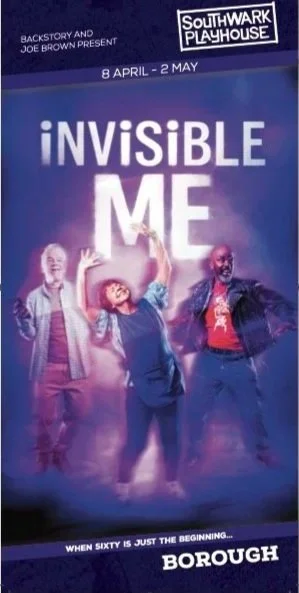
Catch Bren’s new play at the Southwark Playhouse next month
The hat I am wearing right now has both novel and play insets. I think my next project will be to develop a production of my play Grossly Indecent. But that’s currently somewhere on the horizon…😊

QR code for Bren’s new play at the Southwark Playhouse
Thanks so much, Bren! And huge congratulations on the upcoming publication of your novel, Street Sweeper. We wish you every success with this book and all your other exciting creative projects.