• Home
  • About
  • Services
  • Writers
  • Courses
  • News
  • Contact
Menu

The Book Edit

Street Address
Hackney, London
Phone Number
Boutique Editorial Consultancy

Your Custom Text Here

The Book Edit

  • Home
  • About
  • Services
  • Writers
  • Courses
  • News
  • Contact

Beyond the Prize: Bernie McQuillan's Remarkable Year

April 2, 2026 Emily Pedder

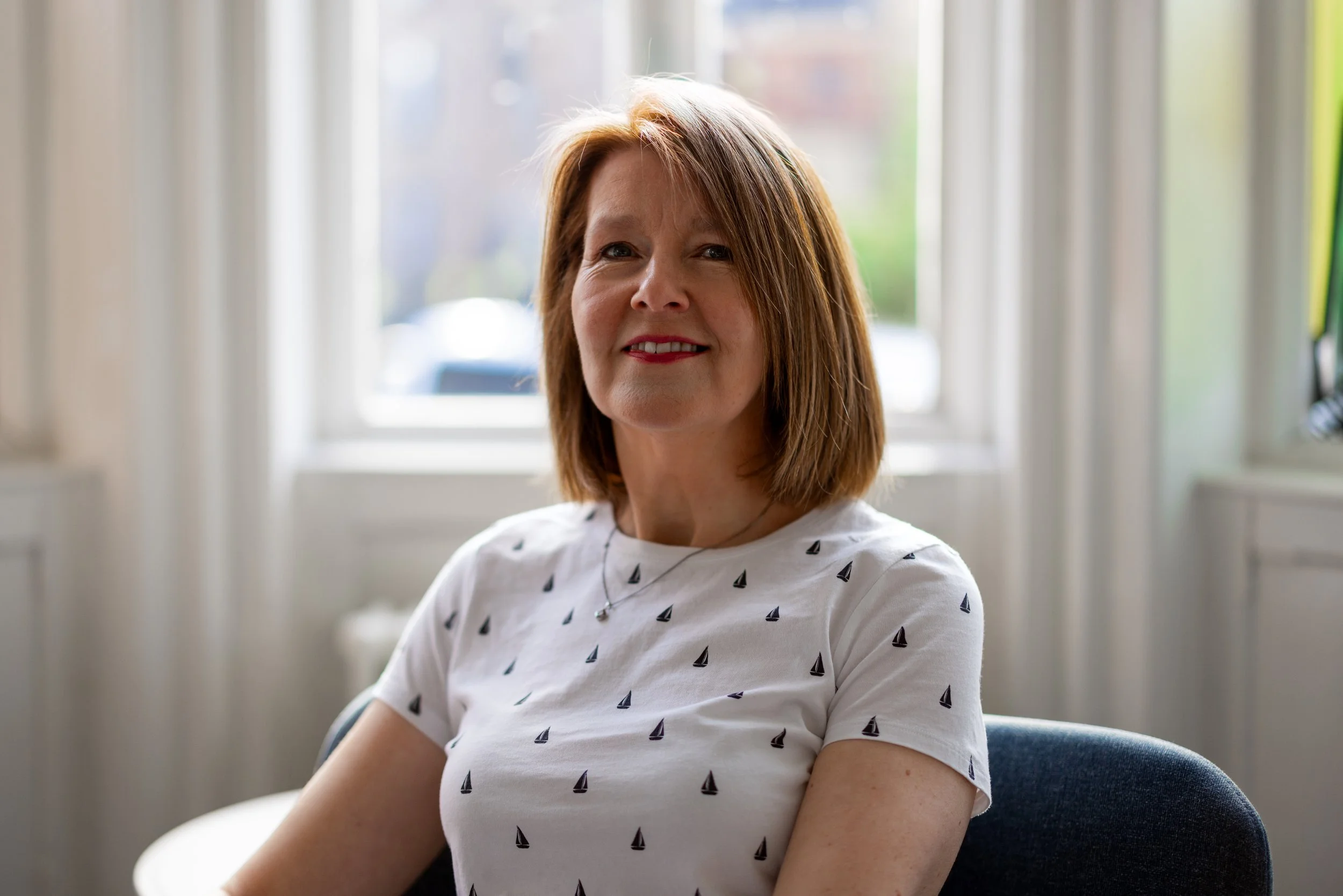
Author Bernie McQuillan

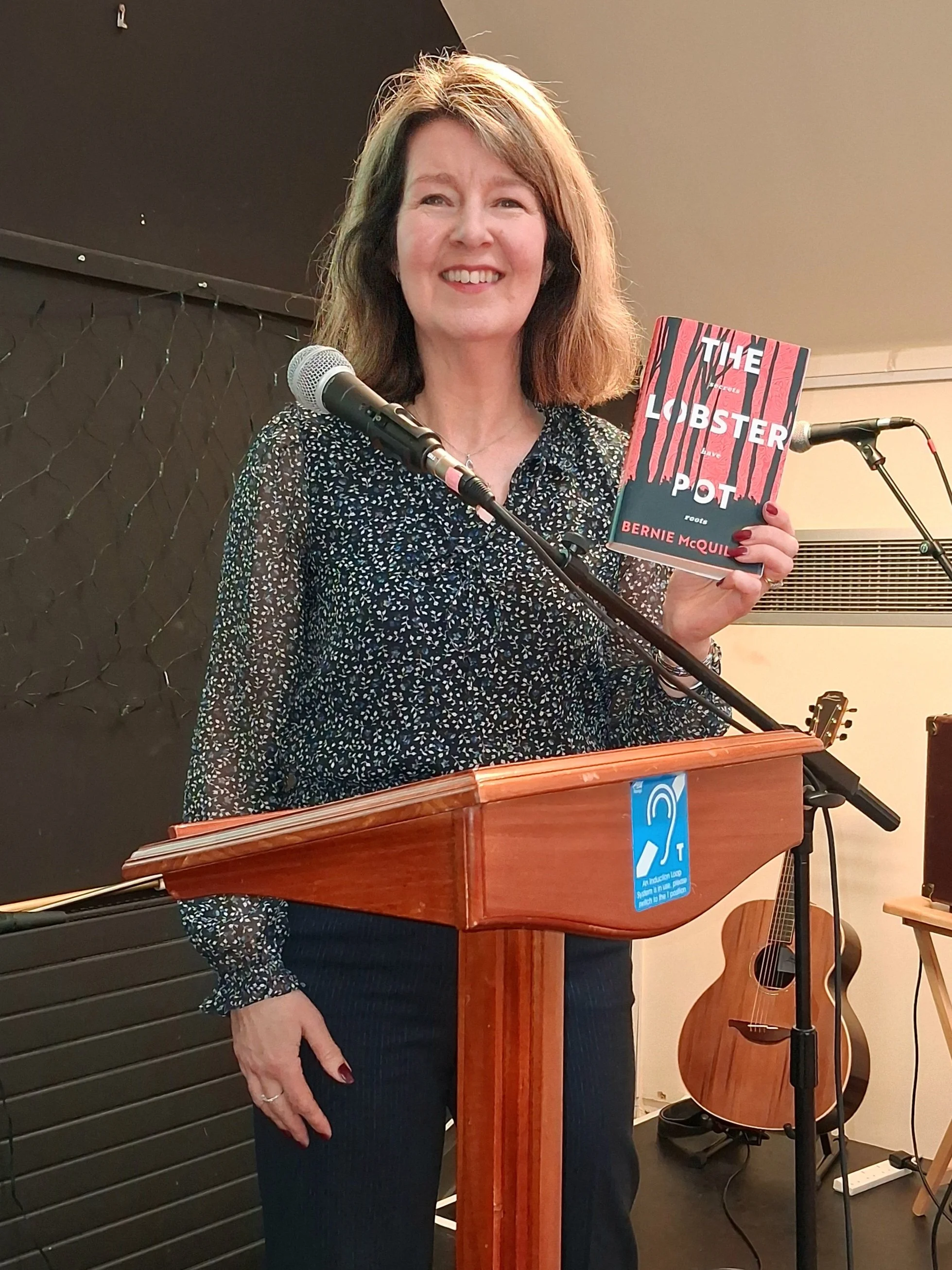
When Bernie McQuillan won the Book Edit Writers’ Prize in 2024, she was quietly working on not one but two pieces of fiction. Fast forward to today, and her short story has been broadcast on BBC Radio 4, her debut novel The Lobster Pot is days away from publication with Indie Novella, and her prize-winning caving story has been shortlisted for the Farnham Book Festival First Five Pages competition. I was delighted to ask Bernie about juggling projects, the road to publication, and what it really means to keep believing in your work.

1. Hearing your work read aloud on Radio 4 is a milestone many writers only dream of. What was it like to listen to Caoimhe Farren bring ‘He Who Conquers Himself Is the Mightiest Warrior’ to life, and did her interpretation surprise you in any way?

Bernie: Being on Radio 4 is nerve-racking and brilliant at the same time. I went for a walk by the river listening to my Warrior story on my headphones the way I always listen to BBC Short Works. I wanted to see if it engaged me as much as other stories I liked and it did. Caoimhe brought a gravitas to the story, drawing out Erin’s thoughts about how to proceed with the return of her breast cancer while learning more about the relationship between her doctor and his wife. The story isn’t without humour as the truth unfolds and Caoimhe drew that out beautifully. Her reading reminded me again of the importance of keeping to a small number of different voices on radio so that the listener doesn’t get confused. Coincidentally, during Feb/March, Caoimhe was in the play ‘Consumed,’ the Karis Kelly theatre production in The Lyric Belfast, and she was wonderful.

2.  The story centres on a woman navigating the tension between medical authority and personal knowledge. Can you tell us a little about the origins of the story?

Bernie: My background is in health and social care, and I wanted to draw out the nuances of hierarchy that exist in the medical profession and between hospital roles. Everyone is equal but some are more equal than others and that reflects in Doctor McEvoy’s belief that he knows best, the way he decides on Erin’s treatment without full discussion. He also thinks his wife’s practice should be limited to exercise classes, he calls her holistic approach ‘mumbo-jumbo’. And yet, the doctor and Erin are both under Michelle’s spell. Erin sees that now, but Doctor McEvoy does not, he is preparing to go rescue his wife rather than rescue himself. Doctors, like everyone else, delude themselves about their attributes. Perhaps, in the end, good doctors are those who recognise that treatment is about the physical (medicine, chemo, diet) and the psychological. 

3.  Your debut novel The Lobster Pot publishes with Indie Novella at the end of April – congratulations! Can you tell us a little about the book and what readers can expect from it?

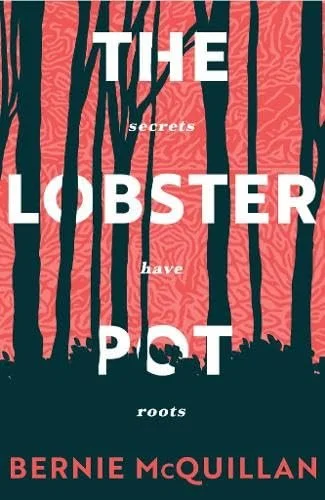
Bernie: The Lobster Pot is a Donegal-based literary mystery, set in the fictional village of Rathmore. It’s the story of one village curse, two missing lads (Tommy and Finn), and three women (Kitty, Isabel and Alannah) searching for answers to their disappearance over four decades. A ‘gripping novel of passion, rivalry, and the dangerous weight of unrequited love’ (Indie Novella). An early draft of the novel was longlisted by the Caledonia Novel Award, shortlisted by the Watson Little & Indie Novella Prize and highly commended in the Irish Novel Fair.

The story emerged during my many visits to Glenveagh Castle in County Donegal, looking out onto the beautiful Lough Veagh and the rolling Derryveagh Mountains. The estate’s history includes John Adair’s 1861 eviction of 244 tenants from the grounds to make way for more profitable land use. The tenants cursed his family and future owners of the estate, promising no more children would be born in Glenveagh. And none have been. Another owner, Professor Kingsley Porter disappeared close to the estate in 1933, his body was never found. I began to think about the likes of the Adairs running a children’s home and wondered if those children might overcome their difficult start in life? Would it destroy them or would the children, as one of the villagers says, learn to be as devious as their masters?

Here's what Bernie McGill (winner of the Edge Hill Short Story Prize) said about The Lobster Pot: ‘Rathmore is a small Irish seaside village with big world problems: fraud, misplaced loyalties, clandestine meetings, hidden desires. The Lobster Pot is a riveting family saga of high drama and tension, of intrigue, lies and suspense.’ And Malachi O'Doherty, journalist, said: ‘At its simplest, this is a story of a young woman's effort to keep a promise to her dead mother that she would protect a brother too easily led astray but it is so much more, a profile of a community and a generation. 

4.  I think I’m right in saying you were writing The Lobster Pot at the same time as your caving story, which went on to win the Book Edit Prize. How do you manage working across very different projects simultaneously, and do they feed each other creatively?

Bernie: I am a writer who loves the landscapes of the west of Ireland, and the less well-known western counties of Northern Ireland. While the themes of The Lobster Pot were bubbling away, I was also reflecting on my earlier life as a caver in the border counties (Fermanagh, Cavan & Leitrim). Many people visit the Marble Arch Caves (where I was a guide) but these passages are just a fraction of this amazing underground world. Combined with the knowledge that, despite the end of the Troubles, there are still a small number of The Disappeared outstanding (men and women who were kidnapped by the IRA during the Troubles and buried in the border area). What if, I thought, one of the disappeared was spirited away through the tunnel network and buried in the land close to where the tunnel emerges? What if his daughter, a caver, discovers the ‘lost’ tunnel and finds bones at the end of the cave?

I manage both projects together by setting my characters firmly in the two distinct landscapes, either the granite and quartzite rock in Donegal (dense and resistant, think Mount Errigal) or the limestone setting in Fermanagh (soft porous rock, characterised by caves, sinkholes and valleys). Both are landscapes where people go missing and both stories have evolved from real incidents. The characters I’ve lived with for so long are formed from their relationship to the landscape and the people of the area and I don’t confuse them. They are very real to me.

5.  You're publishing with a brilliant small independent press, Indie Novella. What has that relationship been like compared to what you might have imagined traditional publishing to be?

Bernie: Firstly, I am indebted to Indie Novella for their wonderful commitment to writers starting out. They offer a fantastic series of writing programs, free to writers.

They are a small team, led by Damien Mosley and it has been an intense period since the offer of publication and contract signing, of drafting and redrafting my work until we were all satisfied that The Lobster Pot was the best it could be. This meant stripping away some of the additional storylines I loved but were superfluous to the story (this was hard) and going deeper into the key story in subsequent edits. Indie Novella are very committed to the small number of projects they take on. The book cover design process was also fascinating, and I love the final cover. I have learned so much during this editing process that it will prove very useful in my caving book and other stories. For example, concentrating on the specificity of the characters, the landscape, the way people speak and change over time. I have gained so much with Indie Novella, I heartily recommend working with Indie publishing. 

6.  Your Book Edit Prize entry has now been shortlisted for the Farnham Book Festival First Five Pages competition, with a different opening. What prompted you to rework the start, and what does that revision process tell you about how your writing has evolved?

Bernie: In my Book Edit version, my caving story was told by four characters, third person past tense, over two timelines, with a flashback to the kidnapping. It is fascinating but understandably hard to keep abreast of who, where and when.

The second draft, currently underway, is a two character, first person story over one timeline, with flashback. I miss my other two characters, but I am working out how to include some of their story (while remembering lessons learned from The Lobster Pot about going deep rather than broad). I am currently (thanks to part-funding via The Irish Writers Centre) on Conor Kostick’s Finish Your Novel programme and we are discussing POV at the moment, the pros and cons of present tense storylines and I am feeling these pros and cons right now!

So, I am not sure yet how I will complete this novel. All I know is that I love the story and the caving gang, and the first 10,000 words were just this week longlisted for the Essex Novel Prize which is great and makes me think it is working for those readers.

7.  Looking back, what did winning the Book Edit Prize give you that relates to where you are now?

Bernie: It’s about confidence, the confidence to concentrate on writing, reading and sharing more with other writers. Sometimes winning something helps when you apply for another programme. Myself and nineteen other Irish writers, from the north and south, have just completed Island of Many Voices (a collaboration between The Linenhall Library, Belfast & Dublin UNESCO City of Literature) where we worked with six well-known writers to understand how their backgrounds shaped their work, before we came together to share our own new pieces of writing. It was a fascinating process, and the conversations urged me on to continue with my caving novel, so the time out has been rewarding for me. Winning the Book Edit prize helped me secure this programme and is a key part of my writing journey so far.

8.  You've clearly been doing the quiet, disciplined work across multiple projects for a long time before this moment of public recognition. What would you say to writers who are in that less visible stage, wondering if it's all going anywhere?

Bernie: Keep going with your practice, while at the same time reaching out to others to share work and feedback. Find out what is going on in terms of support and challenge, through competitions or writer programmess. There is nothing like deadlines to focus the mind, the re-reading aloud of work and recording it and playing it back to sharpen your sentences. I have found a whole new support group on Instagram (@mcquillanbernie) and often come across programmess and competitions on social media that I wouldn’t have found otherwise. I also love going to book launches and author talks for the gems you pick up, and the friendships formed with other writers. Wendy Erskine reminded us, at the finale of The Island programme, that public recognition comes and goes but it is the ongoing work that will sustain us. Excellent advice, I think!

9.  With a novel launching, a Radio 4 credit to your name, and a shortlisted story under revision, what are you working towards now – and is there more Bernie McQuillan work in the pipeline we should be watching out for?

Bernie: I mentioned landscape earlier, and the Island of Many Voices program, just completed. It reminded me that, whilst I’ve written about Donegal, Fermanagh, Cavan and Leitrim, I haven’t talked about my own origins in County Tyrone, an area that comes to life so vividly in the poetry of John Montague, reared in Garvaghey, the land of my mother’s family and an area I am in most weekends. I was at Patrick Gale’s launch this week in Belfast, where he talked about writing about his own family. Anthony J Quinn also discussed Tyrone and the merits of writing his family story in the Island of Many Voices. I am mulling over the mysteries in my own family history and thinking about setting a story in Tyrone.

But for the moment my energies are going into bringing The Lobster Pot to a wider audience, thanks to the likes of this Book Edit interview, as well as finishing a further draft of my caving novel. It is a privilege to be balancing all these things, and I will enjoy it while I can! I have my own website now (courtesy of my son Conor) and I will update my journey there.

Thanks so much Bernie! And huge congratulations on the book. We can’t wait to read it.


Tags Beyondtheprize, Under-represented authors, writers, diver, diverse authors, Bernie McQuillan, indie novella, indie